The Delboeuf Illusion
The Delboeuf illusion is a visual phenomenon in which identical objects appear to have different sizes depending on surrounding context. When an identical food portion is placed on a smaller plate versus a larger plate, the portion on the smaller plate typically appears larger. This optical effect occurs because the human visual system interprets the spatial relationship between the object and its boundary.
The illusion demonstrates that perception is context-dependent rather than absolute. Visual processing continuously compares objects against their surroundings, meaning that identical physical amounts create different perceptual impressions based on vessel size. This fundamental principle of visual perception has been documented across numerous studies examining portion estimation and serving behaviour.
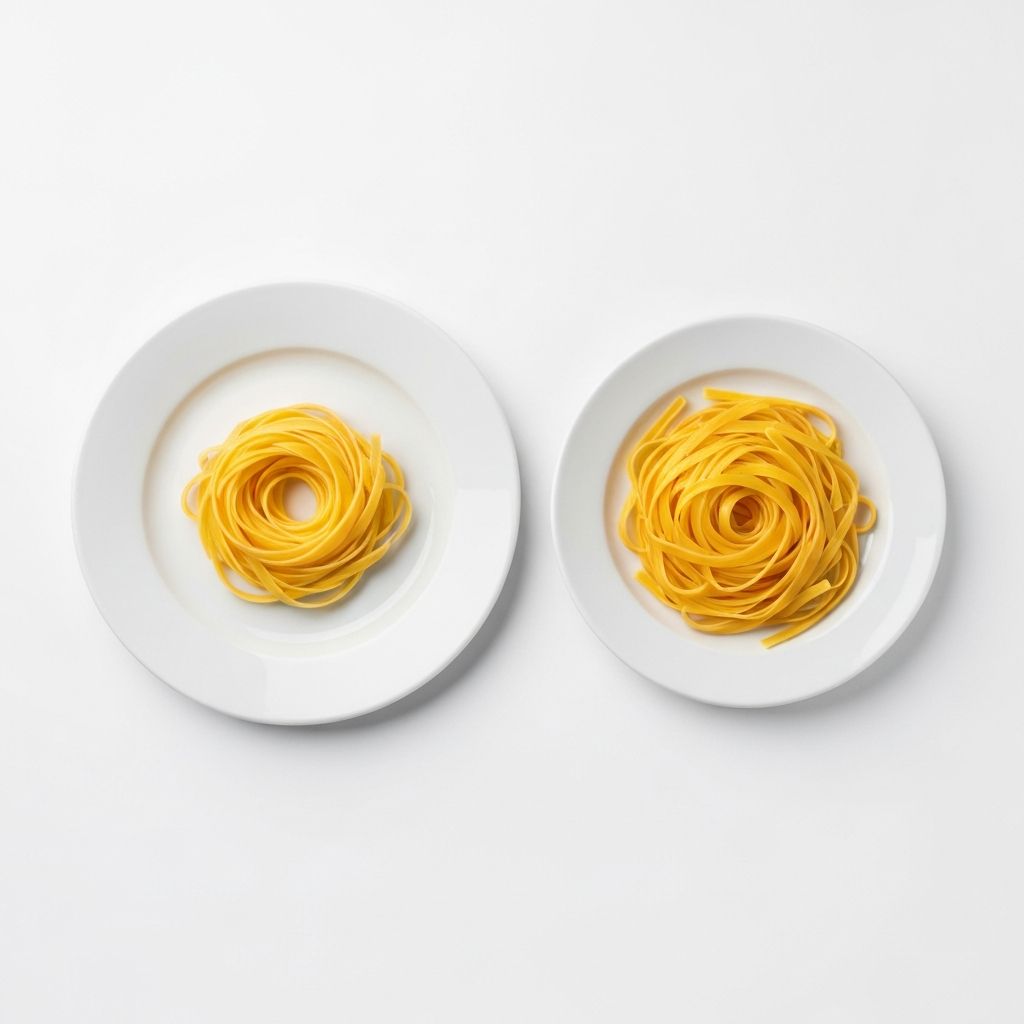
Plate Dimensions and Serving Perception
UK standard dinnerware comes in various sizes, with typical dinner plates ranging from 25-30cm diameter. Smaller plates (20-23cm) create visual contrasts that influence portion estimation. Side plates (18-20cm) and dessert plates (15-18cm) further demonstrate how scale relationships affect perception.
Beyond diameter, plate depth also influences how serving amounts appear. Shallow plates create different visual effects compared to deeper bowls or plates with raised rims. The relationship between food height and plate surface area affects how fully covered the plate appears, which influences both estimation and satisfaction signals during eating.
Plate colour and contrast represent additional factors. High-contrast combinations—such as light food on dark plates or dark food on light plates—enhance visual prominence. These visual properties operate independently and additively, creating combined effects on portion perception that vary across individual observers and contexts.
Research on Plate Size and Consumption
Numerous studies have documented relationships between dinnerware dimensions and reported portion satisfaction. Research participants consuming identical food amounts from smaller plates frequently report greater satisfaction compared to identical amounts on larger plates. This effect demonstrates the role of visual completion—how fully a plate appears to be covered influences perceived adequacy of the serving.
Restaurant and commercial kitchen practices reflect understanding of these perceptual effects. Smaller plates at higher prices and larger plates at lower prices represent deliberate applications of visual perception principles. The economic reality of dishware selection reflects recognition that plate size influences both customer satisfaction and perceived value.
Individual variation in these effects remains notable. Some individuals show stronger susceptibility to plate size effects, while others demonstrate more consistent estimation across dinnerware types. Age, prior experience, and individual differences in visual processing contribute to variation in how strongly plate dimensions influence perception in any specific instance.
Practical Context Without Prescription
Understanding how plate size influences portion perception provides context for everyday serving behaviour without implying any specific application. The Delboeuf illusion exists as a documented visual phenomenon affecting human perception uniformly across populations. Recognition of this principle informs understanding of why serving amounts feel adequate on smaller plates and appear sparse on larger ones.
This knowledge remains purely informational. Individual choices about dinnerware, portion amounts, and eating patterns remain entirely personal decisions. The fact that plate size influences perception does not imply that any particular plate size or portion quantity represents an optimal or correct choice for any individual. Perception effects and actual choices represent distinct phenomena.
Cultural traditions, personal preferences, meal context, and individual requirements determine appropriate dinnerware and serving practices. No universal principle derived from plate size research applies as guidance for personal decisions. This exploration explains mechanisms of visual perception without offering behavioural recommendations or outcome promises.
Continue Exploring Portion Concepts
Return to articles to explore additional aspects of portion perception, serving sizes, and eating patterns.
Back to Articles